When I was nine, I moved to Columbus, Ohio, with my family, Missouri transplants who’d been living for years in Pittsburgh. The kids in Columbus used the word “pop” for sweet fizzy drinks, and it sounded so strange. I had always thought, in my Southern way, that despite Coke’s being a specific brand, the generic word“coke” referred to the drinks the Ohioans referred to as “pop.”
For a while after relocating to Ohio, I remember insisting on using the word “coke” and feeling embarrassed to have to use this silly term “pop,” common to my new Ohio-born peers, as needed to clarify when actual Coke wasn’t on the menu.
What’s so interesting about this memory is the awkwardness I felt at using my adopted region’s vocabulary.
Now, as an adult who has studied language and communication in some way or another for pretty much my whole adult life, I know how the words we use and the way we use them are central to our very identities.
Today, I’m thinking about how sometimes the words we use narrow down where we’re from, as in “dope” for cola in parts of Appalachia.
Sometimes, the words we use narrow down where we’re from quite specifically, such as to a state, region of a state, and even a city, and in today’s blog post I’ll detail some of the interesting examples I’ve turned up.
Those of you who have studied languages know many of them have a second person plural form (to refer to “you” when it’s more than a single person). One such language is Modern English, but many expressions have developed to fill this void.
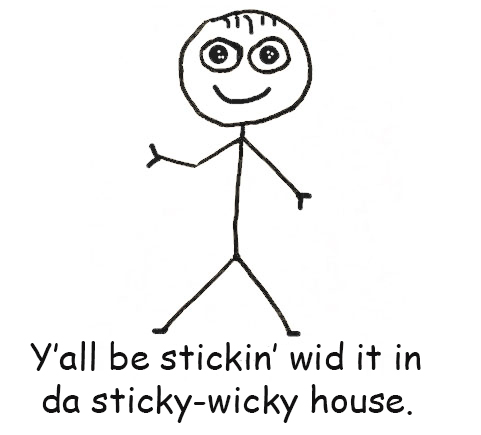
Southerners and speakers of the African American vernacular English use “y’all” (an abbreviation of “you all”).
Two expressions for second person plural will identify where a speaker is from more specifically. “Yinz” is used in western Pennsylvania, and “youse” and “youse guys” are used by some from New Jersey and eastern Pennsylvania.
“Yinz” developed from a contracted form of “you ones” used by Scottish and Irish settlers in the region. “Youse” and “youse guys” are associated with working class (especially descendants of Italian and Irish immigrants) populations in the area but has become more widely used.
Sometimes, food and drink terminology is regional because it refers to a cultural preference as settlers moved into in the area and brought their cuisine with them.
When I moved from Columbus to the Detroit area in the 2000s and saw pasties (rhymes with cast–ees) at bakeries year-round and pąckis (poonch–kees) around Fat Tuesday (Mardi Gras), I had no idea what they could be. Pasties, meat-filled pies in flaky pastry, came with Cornish miners working in in the Upper Peninsula of Michigan and spread through the state, and pąckis, a jelly-filled yeast-dough pastry like a doughnut, are found in areas with larger Polish populations.
Some classes of foods have regional terms as well. Submarine sandwiches, made on a long roll, often with warm ingredients like meats, cheeses, and sauces, are a prime example. The most generic term is “sub,” and if someone asks for a “hoagie,” they are likely from Pennsylvania; if they call it a “grinder,” think new England; and if they call it a “po’boy,” the south. This regional difference is also one I remember well as my nine-year-old Ohio friends found it quite hilarious when I referred to what they called a “sub” as a “hoagie.”
A few other regional food and drink terms of interest are the oh-so-logical “hotdish” (casserole) used in North Dakota; a “creamy” (soft-serve ice cream) used in Vermont; and “packie” used in the northeast and “package store” (both “liquor store) used in the south. The story of these last two expressions shows the link between history and language, as they both refer to laws from after Prohibition requiring alcohol to be sold packaged rather than dispensed into customers’ own growlers or other containers.
Expressions for the grass between lanes of traffic and between sidewalks and the street are more numerous than I would have expected. For the strip between lanes, expressions include “median” , neutral ground (Louisiana and parts of Mississippi), dividance (North Carolina), mall (upstate New York), midway (Connecticut), and more. For the grass between the sidewalk and street (commonly, the easement), terms include tree lawn (in Cleveland, Ohio), devil’s strip (Akron, Ohio), furniture zone (used by civil engineers, not regionally, but interesting nonetheless), parkway (Illinois), and parking/parking strip (western United States).
A whole blog series could be written on the topic (foreshadowing), but for today I’ll leave you with a few more gems I think you’ll find interesting:
I’ll leave you with a kind wish: “Tap ‘er light” (“Take care” in Butte, New Mexico).
Sarah P.
Get a free sample proofread and edit for your document.
Two professional proofreaders will proofread and edit your document.
We will get your free sample back in three to six hours!





© 2010 - 2020 ProofreadingPal LLC - All Rights Reserved.