



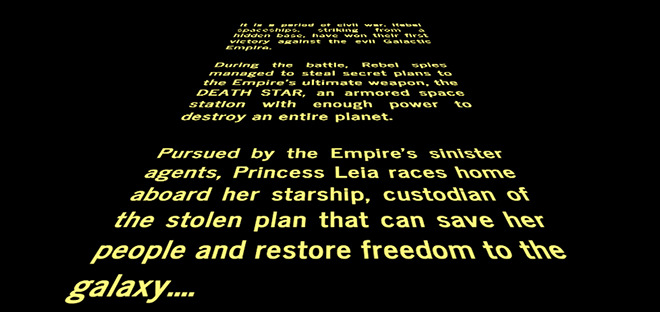
The way an author structures their sentences has a lot to do with the impact their writing has. Simple sentences can be short and choppy and juvenile:
But sometimes writers take sentence joining and elaboration too far, and their writing can get so complicated that grammatical errors are introduced and meaning is lost.
In today’s post, I will review the basic types of sentences and offer some tips to avoid trouble with complicated structures perhaps meant to impress that don’t.
Sentences are groups of words that form complete thoughts and express a statement (declarative sentence) or exclamation or ask a question. In writing, sentences must begin with a capital letter and end with appropriate ending punctuation (periods, exclamation points, and question marks). A clause is a group of words containing a subject and a verb and can be independent (able to stand on its own) (Ex: It is raining.) or dependent (unable to stand on its own; Ex: When it is raining.).
By combining different clause types, sentences can take four basic forms: simple, compound, complex, and compound-complex.
Independent clauses are joined with either a semicolon or a comma and a coordinating conjunction. You can remember what the finite list of coordinating conjunctions includes with the acronym FANBOYS: For, And, Nor, But, Or, Yet, So.
Dependent clauses are set off by a subordinating conjunction, of which there are many, such as although, whereas, since, and such as. When the dependent clause comes before the independent clause, you use a comma.
However, when the dependent clause comes after the subordinating conjunction, you usually don’t put a comma before it. (People get this one wrong a lot!)
Clauses can also be joined with correlative conjunctions, which are pairs of conjunctions that function together. Examples of correlative conjunctions are either/or, neither/nor, both/and, not only/but also.
Note that in the example, the first clause is dependent and the second one is independent. Also note that “not only” and “but also” are written next to the things being compared. Also, the two things are parallel in grammatical function: In the example, they are two things, expressed with a clause (“I + like [gerund]”). As with all things list-related, this is of crucial importance (see “Good Parallelism, Bad Parallelism” for details about this important topic).
Be careful using correlative conjunctions; when in doubt, restructure the sentence to avoid their use:
Phrases can also join the sentence formation party.
Like a clause, a phrase is a group of words, but it lacks the subject-verb unit. There’s no such thing as an “independent phrase” because it lacks a verb. Examples of phrases are “While writing” (no subject) and “on my birthday” (no verb).
A good way to think of a phrase is as a group of words that functions in a sentence like one word.
Phrases are typically joined to an independent clause or one of the other three sentence types with a comma or other punctuation and/or a preposition, and they may be joined at the beginning, somewhere in the middle, or the end. Let’s look at a few examples to see how phrases are joined with punctuation or prepositions, depending on their function.
Writers should avoid short, choppy, and simple (e.g., independent clause only) sentences. Practice writing more complicated sentence types with punctuation and parallelism in mind and simplify complex structures as needed when you are not sure you’ve got them right. It’s always better to rewrite a sentence and avoid complex structures if your usage is correct, as you may not wind up saying what you intend, or you may wind up seeming to say anything at all when it’s really unclear.
And remember, we at ProofreadingPal are always here to help clarify your writing at any stage.
Sarah P.
*Apologies to Ruskin.
Get a free sample proofread and edit for your document.
Two professional proofreaders will proofread and edit your document.
We will get your free sample back in three to six hours!





© 2010 - 2020 ProofreadingPal LLC - All Rights Reserved.